What Information is Given on a Birth Certificate?


 March 30, 2026 9:33 pm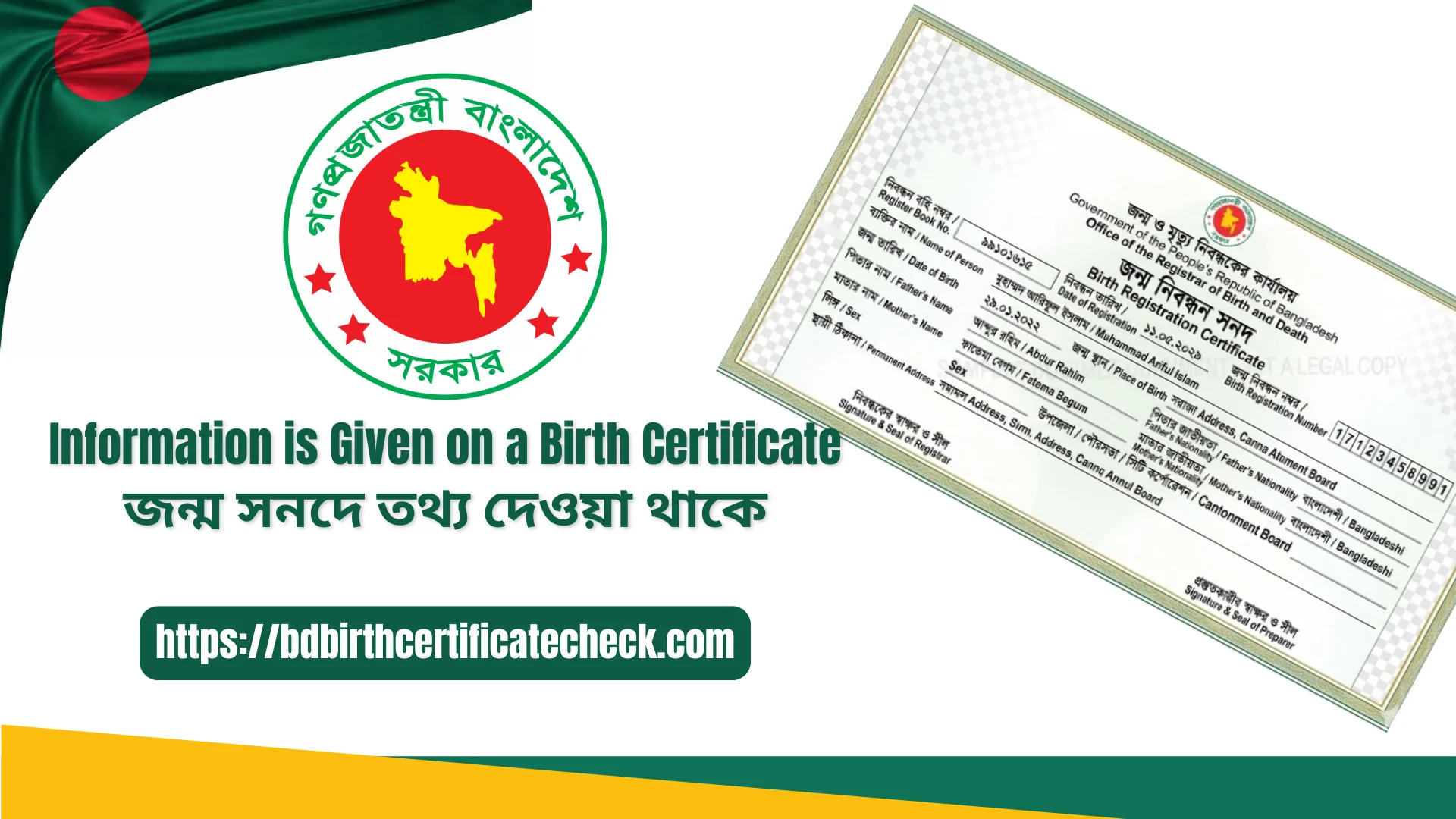
What Information is Given on a Birth Certificate? The first time I had to dig out my birth certificate for a passport application, I realized I had never actually looked at it properly. That small, subtly yellowed piece of paper had been stored in a drawer throughout my entire life, and I was unaware of the extent of its true significance. A birth certificate is an official vital record that documents the circumstances of a child’s birth and serves as primary evidence of identity, citizenship, and age.
Most people only think about this document when they urgently need it for a passport, a bank account, school enrollment, or a legal process. Understanding what is on it ahead of time saves a lot of stress. Here is a clear breakdown of every piece of information a birth certificate typically carries.
Date of Birth
The date of birth is the most referenced piece of information on any birth certificate. It records the exact day, month, and year you were born and is used across almost every legal and administrative process in life.
| Purpose | Why Date of Birth Matters |
|---|---|
| Legal Identity | Confirms who you are in official records |
| Age Verification | Required for licenses, voting, and benefits |
| Medical Records | Helps track health history and milestones |
| Government Services | Determines eligibility for age-based programs |
From applying for a driver’s license to qualifying for senior discounts, this single date follows you everywhere. It is the one detail that is almost never skipped on any official form.
Place of Birth
The place of birth goes beyond just geography; it directly shapes your nationality and the rights and benefits you are entitled to. A birth certificate typically records the following:
- Country of birth
- State or province
- City or town
- Hospital name or specific delivery location (in many cases)
This information plays a critical role in citizenship applications, dual nationality claims, and travel document processing. I have seen cases where people applying for citizenship by descent had to prove not just their country but their exact city of birth, and the birth certificate was the only document that held that detail with full legal authority.
Raised, Embossed, or Multicolored Seal
This is the feature most people overlook, but it is one of the most important. The seal pressed onto a birth certificate by the issuing government authority is what makes it official. Without it, the document is not legally valid.
- A raised seal is physically pressed into the paper and can be felt by touch
- An embossed seal creates an impression on the surface of the document
- A multicolored seal uses color printing as an added security layer
This seal is the first thing officials examine when verifying a birth certificate for passport processing, visa applications, or any government procedure. It confirms the document is authentic and not fraudulent or forged. Think of it as the document’s security fingerprint.
Registrar’s Signature
Every official birth certificate carries the registrar’s signature. The registrar is the government official responsible for recording the birth and overseeing the issuance of the certificate. Their signature is what makes the document legally recognized.
- Confirms the birth has been officially recorded and verified
- Makes the certificate legally valid for government and institutional use
- Without it, the document is considered incomplete or unofficial
I have known people who received hospital-issued documents and assumed they were the real birth certificate, only to find out those documents were not legally recognized because they lacked the registrar’s signature. This single detail is crucial.
Parent’s Information
A birth certificate does not only document the child; it also records key details about the parents. This section typically includes:
| Field | Details Recorded |
|---|---|
| Full Names | Both parents’ complete legal names |
| Mother’s Maiden Name | Pre-marriage surname of the mother |
| Places of Birth | Where each parent was born |
| Ages or Occupations | Included on some certificates |
This information is relevant for family lineage tracing, inheritance rights, adoption and custody proceedings, and eligibility for government assistance programs. For anyone researching genealogical records or applying for citizenship by descent, the parental section is often the most important part of the entire document.
Gender
Gender is recorded on a birth certificate under the “sex” category and reflects the biological sex assigned at birth. It feeds into:
- Identification purposes across personal and official records
- Health assessments and medical history tracking
- Legal documentation in most countries
It is worth noting that gender identity is a personal and complex issue, and many jurisdictions today allow amendments to this field. However, the birth certificate remains the original source document the starting point from which all other records are built.
Certificate Number
Every birth certificate is assigned a unique certification number at the time of registration. This number is what the government uses to locate your specific birth record within official archives.
- It acts as a unique identifier among millions of records
- Required when requesting a replacement birth certificate
- Used for record-keeping in government databases
- Helps confirm the document is the original and not a duplicate
I always recommend writing this number down and storing it separately from the physical certificate. Having this number significantly expedites the process of obtaining a replacement from the issuing office in the event of loss or damage to the original.
Registrar’s Office Location
The birth certificate also includes the address or location of the registrar’s office that issued it. This detail is easy to overlook but becomes very useful when you need to:
- Request additional copies of the certificate
- Apply for corrections to any recorded information
- Verify the document’s origin for legal or international purposes
It also confirms that the certificate comes from a recognized government source, which matters in legal proceedings and international document verification where the origin of the document must be established clearly.
Signature of Parents or Witnesses (if applicable)
In specific cases, particularly homebirths or non-hospital births, a birth certificate may also carry the signatures of parents or witnesses. This is not standard on every certificate, but where applicable, it serves an important purpose.
- Confirms the child’s identity in the absence of hospital records
- Provides an additional verification layer for legal and medical use
- Can support identity disputes or legal proceedings
If your birth certificate carries these signatures, they are not a formality; they exist because not every birth happens in the same setting, and the document needs to be verifiable regardless of where the birth took place.
FAQs About Information is Given on a Birth Certificate
Can a birth certificate be used as a primary ID?
A birth certificate is widely accepted as a primary identity document for many official processes. It is commonly used when applying for a passport, enrolling in school, registering for government services, or opening certain bank accounts. However, it is worth noting that a birth certificate alone may not always be sufficient as a standalone photo ID since it does not carry a photograph. In most cases, it works best when paired with another form of identification.
What should I do if there is an error on my birth certificate?
Errors on a birth certificate, whether a misspelled name, wrong date of birth, or incorrect parental information, need to be corrected through the registrar’s office that originally issued the document. The process typically involves submitting a formal correction request along with supporting documents such as hospital records, affidavits, or other legal paperwork. It is important to fix these errors as early as possible since incorrect information can cause complications when applying for passports, citizenship, or other legal documents.
How do I get a replacement if my birth certificate is lost or damaged?
If your birth certificate is lost or damaged, you can request a replacement from the registrar’s office or vital records department of the state, city, or country where you were born. You will typically need to provide your full name, date of birth, place of birth, and your certificate number if you have it noted somewhere. Processing times and fees vary depending on the issuing authority, but most governments offer both standard and expedited replacement options.
Is the information on a birth certificate ever updated after it is issued?
A birth certificate is generally a permanent record of the facts at the time of birth. However, certain information can be legally updated or amended under specific circumstances such as a legal name change, gender marker amendment, or correction of an error. These updates do not erase the original record but are added as official amendments. The process for making such changes varies by country and jurisdiction and usually requires a court order or formal legal documentation.
Official Source
- Birth and Death Registration Information System (BDRIS) https://bdris.gov.bd
- Online Birth Certificate Verification Portal https://everify.bdris.gov.bd
Conclusion
A birth certificate is one document that quietly supports almost every major milestone in your life. Knowing what it contains from your date of birth to the registrar’s signature helps you use it with confidence. Keep it safe, know its details, and never underestimate its legal importance.
Raba Khan 
Hi, I’m Raba Khan. I created bdbirthcertificatecheck.com to help people easily check birth certificates online. I share simple, clear guides so anyone can understand the process and avoid confusion. My goal is to make official tasks easier for everyone.