How Long After Giving Birth Do You Have to Register?


 March 30, 2026 9:32 pm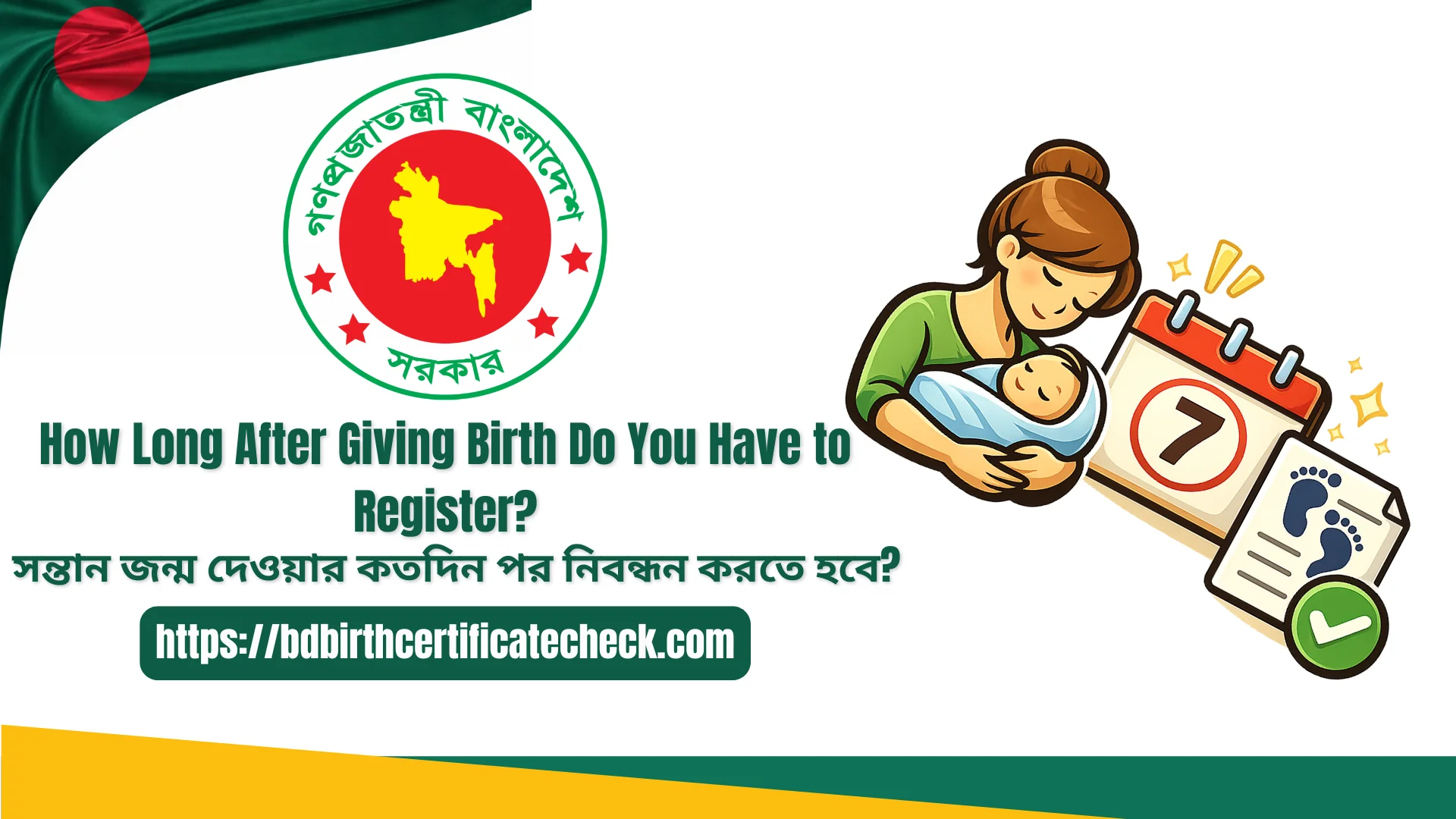
How Long After Giving Birth Do You Have to Register? When I first helped a relative navigate the newborn registration process in Bangladesh, the one thing nobody tells you upfront is how quickly those early days disappear. The 42-day mandatory deadline for birth registration can quickly elapse due to busy feeding schedules and sleepless nights. Missing it does not just mean extra paperwork; it means your baby exists outside the official record, without the legal identity they are entitled to from day one.
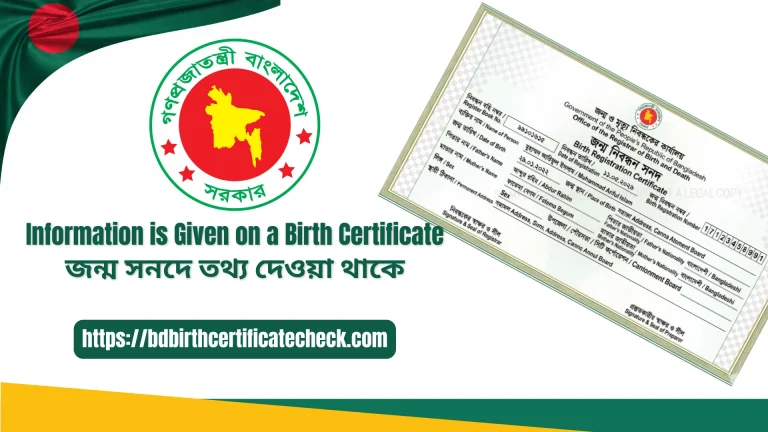
The birth certificate issued after registration is the very first proof that your child is a recognized citizen of Bangladesh. Whether it is school enrollment years later or accessing government welfare benefits, everything traces back to this one step taken within the designated period after birth.
Understanding the Birth Registration Process in Bangladesh
The registration process in Bangladesh is more straightforward than most parents expect, but only when approached within the designated 42-day timeframe. The law does not treat this as a suggestion; it is a firm legal requirement, and the complications that arise from missing it are entirely avoidable. From the moment your baby is born, the clock starts.
What makes Bangladesh’s system practical is that the procedure is accessible at multiple levels:
- Rural areas: Union Parishad offices handle registration locally
- Urban areas: Municipal and City Corporation offices manage the process
- Health institutions: Some hospitals facilitate registration directly
Once parents understand where to go and what to bring, the child’s birth becomes part of the official record without unnecessary delays.
Importance of Timely Birth Registration
A 42-day period sounds generous until you are deep in postpartum recovery. Completing timely birth registration within this window is what separates a smooth legal process from a drawn-out ordeal. The birth certificate produced at the end is not just a piece of paper; it is the gateway to national identification, healthcare access, and future school enrollment under Bangladeshi law.
Delays create a ripple effect that is genuinely difficult to reverse:
- Acquiring essential documents becomes harder
- The child’s rights remain in a grey area until officially recorded
- Future processes like National ID applications and school enrollment get disrupted
Treat registration not as a formality but as the critical first step in securing your child’s legal foundation under Bangladeshi law.
Where to Register Your Baby’s Birth in Bangladesh?
Most parents are surprised to learn that birth registration does not require a trip to a central government office. Registration points are spread across districts and cities throughout the country.
| Registration Point | Who It Serves |
|---|---|
| Union Parishad Office | Rural and village-level residents |
| Municipality Office | Small town and semi-urban residents |
| City Corporation Office | Major city residents |
| Local Health Institution | Parents who gave birth in a registered hospital |
If you are unsure of the nearest location, your local union parish or municipality will guide you directly. What I always advise is to identify the exact office, even before birth. Knowing the location ahead of time means one less thing to figure out under pressure.
Required Documents for Birth Registration
Getting the documentation right the first time saves significant back-and-forth. Here is what parents need to bring:
- Hospital birth certificate: issued at the time of delivery
- Parents’ National ID Cards (NID) or online birth registration certificates
- Date of birth: the exact day the baby was born
- Time of birth: required for accurate record-keeping
- Place of birth: hospital name or home address
- Full names of both parents: exactly as they appear on official identification
- Witness information: required in cases of discrepancies or unusual circumstances
Accuracy here is non-negotiable. Please ensure that all information on the registration form is complete and accurate, as any discrepancies can delay the entire process.
The Benefits of Timely Birth Registration
Beyond the legal requirement, a birth certificate provides opportunities that parents often overlook until they are in dire need. The services and rights a child can access throughout their life in Bangladesh are directly shaped by whether parents acted within the stipulated timeframe.
| Benefit | Details |
|---|---|
| Health Services | Eligibility for vaccinations, child health programs, and medical care |
| Education Access | Required for school enrollment at every level |
| National Identification | Foundation for obtaining a National ID at age 18 |
| Government Welfare | Required to apply for subsidies and welfare benefits |
| Proof of Identity | It serves as the child’s earliest legal identity document |
A timely registration, done promptly in those early weeks, is genuinely one of the highest-value steps a parent can take for their child’s future.
Steps to Complete Birth Registration in Bangladesh
The process, when handled within the 42-day window, is straightforward. Here is a step-by-step breakdown:
| Step | Action | Details |
|---|---|---|
| 1 | Visit the local registrar office. | Locate the nearest Births, Deaths and Marriages office and bring all required documents |
| 2 | Fill Out the Registration Form | Provide accurate details about the baby and both parents |
| 3 | Submit Documents | Hand over proof of birth such as hospital records along with parent identification |
| 4 | Pay the registration fee. | Pay any applicable fee at the counter and retain the receipt |
| 5 | Receive the Birth Certificate | Collect the official certificate after processing and store it safely |
The key is visiting the local registrar office promptly and arriving prepared rather than making multiple trips due to missing documents.
Consequences of Delayed Birth Registration in Bangladesh
While registering after the 42-day deadline doesn’t eliminate the process, it does significantly increase the requirements. Here is what parents can expect if they miss the window:
- Increased paperwork: an affidavit from one or both parents is typically required
- Witness statements may be necessary depending on the circumstances
- Fines and penalties: late registration often attracts fees that are entirely avoidable
- Delays in essential documents: the birth certificate, National ID process, and school enrollment can all be disrupted
- Prolonged process: what could have been a single office visit becomes a multi-step ordeal
Delaying registration by months, instead of days, significantly compounds the challenges. These are real consequences, not hypothetical ones.
When Should You Register a Birth?
Ideally, aim for the first 7 to 10 days after birth. This gives parents ample time to gather all required documents without the pressure of the 42-day deadline looming overhead.
- Register within 7–10 days for the smoothest experience
- Use days 10–30 if early registration was not possible, but act without further delay
- Do not wait past day 35: last-minute complications like office closures or missing documents can push you past the deadline
From personal experience guiding families through this process, those who registered within the first week found it the smoothest. The child’s birth is properly completed in the official system, the certificate arrives without delay, and the family moves forward without unnecessary administrative stress hanging over those precious early weeks.
FAQs About How Long After Giving Birth Do You Have to Register?
What happens if I miss the 42-day birth registration deadline in Bangladesh?
Missing the 42-day deadline does not mean registration is impossible, but it does make the process considerably more complicated. Late registration typically requires additional documentation such as an affidavit from the parents, witness information, and, in some cases, payment of fines or penalties. The delays caused by late registration can also disrupt time-sensitive processes like school enrollment and National ID applications. Acting within the designated timeframe is always the better path.
Is birth registration free of charge in Bangladesh?
Yes, birth registration is completely free of charge if completed within the stipulated 42-day period. However, if parents miss this window, fees and additional documentation requirements may apply depending on how late the registration is filed. To avoid any unexpected costs, it is always best to complete the registration process promptly after the child’s birth.
What documents are required to register a newborn’s birth in Bangladesh?
To complete birth registration, parents need to bring the hospital birth certificate, both parents’ national ID cards (NIDs) or online birth registration certificates, and accurate details, including the date of birth, time of birth, and place of birth. In cases involving discrepancies, witness information may also be required. Ensuring all documents are accurate and complete before visiting the local registrar office will make the process smooth and straightforward.
Where can I register my child’s birth in Bangladesh?
Birth registration can be completed at several locations depending on where you live. Rural residents can visit their local Union Parishad office, while those in towns and cities can go to the municipality or city corporation office. Parents who gave birth in a registered hospital may also be able to initiate registration directly through the health institution. If you are unsure of the nearest registration point, your local union parish or municipality will guide you to the correct location.
Official Source
- Birth and Death Registration Information System (BDRIS) https://bdris.gov.bd/
- Birth Certificate Verification Portal https://everify.bdris.gov.bd/
Conclusion
Birth registration in Bangladesh is a legal obligation every parent must prioritize within the 42-day deadline. A timely birth certificate secures your child’s identity, unlocks access to education, healthcare, and government welfare benefits, and lays the foundation for all future documentation. Act early, arrive prepared, and protect your child’s rights from day one.
Raba Khan 
Hi, I’m Raba Khan. I created bdbirthcertificatecheck.com to help people easily check birth certificates online. I share simple, clear guides so anyone can understand the process and avoid confusion. My goal is to make official tasks easier for everyone.